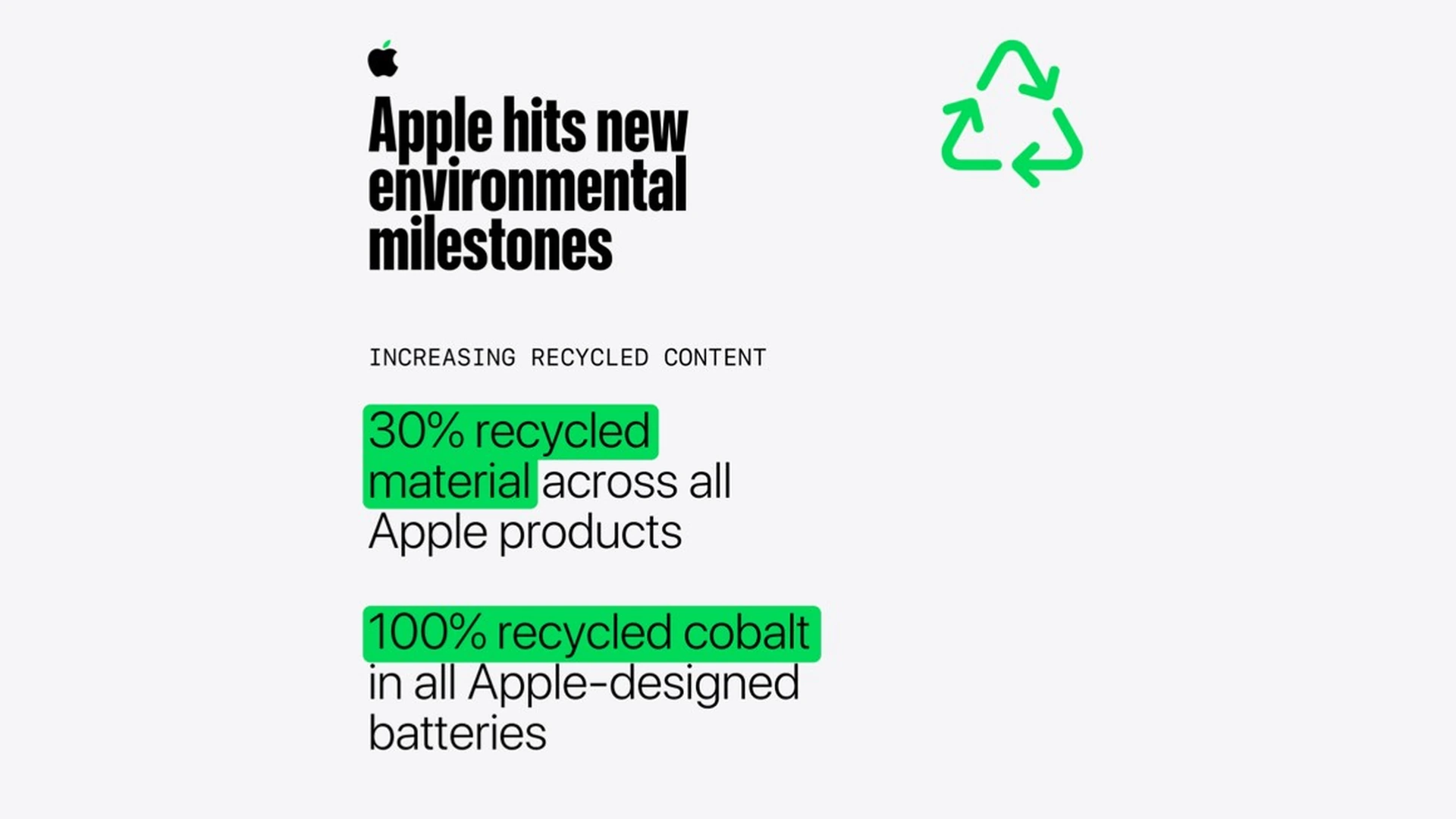
Apple Inc. has announced a significant environmental milestone, revealing that recycled materials now make up a larger share of its products than ever before. In its latest environmental progress report, the technology giant said 30 percent of all materials used across devices last year came from recycled sources, marking one of the company’s strongest sustainability achievements to date.
The update reflects Apple’s broader effort to reduce dependence on newly mined metals, plastics, and other raw materials while expanding the use of recovered resources in popular products such as the iPhone, MacBook, iPad, and accessories.
Apple Pushes Circular Manufacturing Strategy
For years, consumer electronics production has relied heavily on extracting fresh natural resources. Mining for aluminum, cobalt, gold, and rare earth elements can carry environmental costs, including emissions, waste, and pressure on local ecosystems.
Apple says it is working to change that model by building a more circular supply chain where valuable materials are recovered from older devices and reused in new products.
According to the company’s latest figures, nearly one third of all materials used in Apple devices last year were recycled. That milestone signals growing progress for a manufacturer that ships millions of products globally each year.
Batteries, Aluminum and Magnets See Major Gains
The report highlights several categories where Apple says recycled content has now reached full adoption in selected components.
The company stated that all custom designed batteries across its devices now use 100 percent recycled cobalt. Cobalt is a critical battery material widely used in rechargeable electronics and electric mobility products.
Apple also said all new aluminum enclosures for MacBooks and iPads are now made from 100 percent recycled aluminum. Aluminum is one of the most widely used materials in modern electronics because it is lightweight, durable, and highly recyclable.
Inside devices, magnets now use 100 percent recycled rare earth elements. These materials are essential for speakers, haptic systems, and charging technologies.
In another notable step, Apple said gold plating on multiple printed circuit boards is now sourced entirely from recycled gold, reducing the need for additional extraction of one of the world’s most valuable metals.
How Apple Recovers Materials From Old Devices
A major part of Apple’s recycling strategy depends on specialized robots designed to disassemble used and damaged phones with precision.
The company uses machines named Daisy, Cora, Dave, and Taz to separate components from older iPhones and other devices. These systems are built to recover metals, plastics, and glass that might otherwise be lost in conventional recycling streams.
Traditional electronics recycling can damage components or mix materials in ways that lower their value. Apple says robotic disassembly helps preserve higher quality raw materials so they can be returned to manufacturing more effectively.
Recovered materials are then processed and reintroduced into supply chains for future products.
Why This Matters for Consumers and the Industry
Sustainability is becoming a larger factor in consumer purchasing decisions, especially as buyers look for longer lasting devices and environmentally responsible brands.
Apple’s progress could also influence the wider electronics sector. As one of the world’s largest consumer technology companies, its manufacturing choices often shape supplier standards and industry trends.
If large scale recycled sourcing continues to expand, it could help reduce pressure on mining operations, lower waste, and support cleaner production methods across the market.
At the same time, maintaining premium product quality remains critical. Apple says engineers have spent years ensuring recycled metals and components meet the same durability and performance standards customers expect.
Long Term Climate Goals Remain in Focus
The milestone comes as Apple continues broader climate commitments tied to emissions reduction and cleaner operations. Like many multinational companies, Apple faces growing scrutiny from regulators, investors, and consumers over environmental impact.
Increasing recycled content is one of the most direct ways manufacturers can reduce carbon intensity while conserving limited natural resources.
Industry analysts say future progress will likely depend on better device collection systems, stronger repair programs, and improved recycling technology worldwide.
A Turning Point for Modern Electronics
Apple’s latest numbers suggest recycled materials are moving from a niche sustainability effort into mainstream large scale manufacturing.
For consumers, the change may be largely invisible on the surface. iPhones, MacBooks, and iPads still look and function as premium devices. But behind the scenes, more of those products are being built from materials that have already lived one life before.
That shift could define the next era of electronics manufacturing where performance, design, and environmental responsibility increasingly move together.