A Major Step Forward for Electric Vehicle Navigation
In a significant upgrade aimed at improving the electric vehicle experience, Google Maps is rolling out AI powered battery prediction and trip planning features to more than 350 electric vehicle models through Android Auto. This move marks a major shift in how EV drivers plan their journeys, addressing one of the biggest concerns among users: range anxiety.
With this update, drivers no longer need to rely on multiple apps or guesswork to manage their battery levels. Instead, Google Maps integrates intelligent recommendations directly into the navigation system, offering a seamless and more reliable driving experience.
Smarter Charging Recommendations Based on Real Data
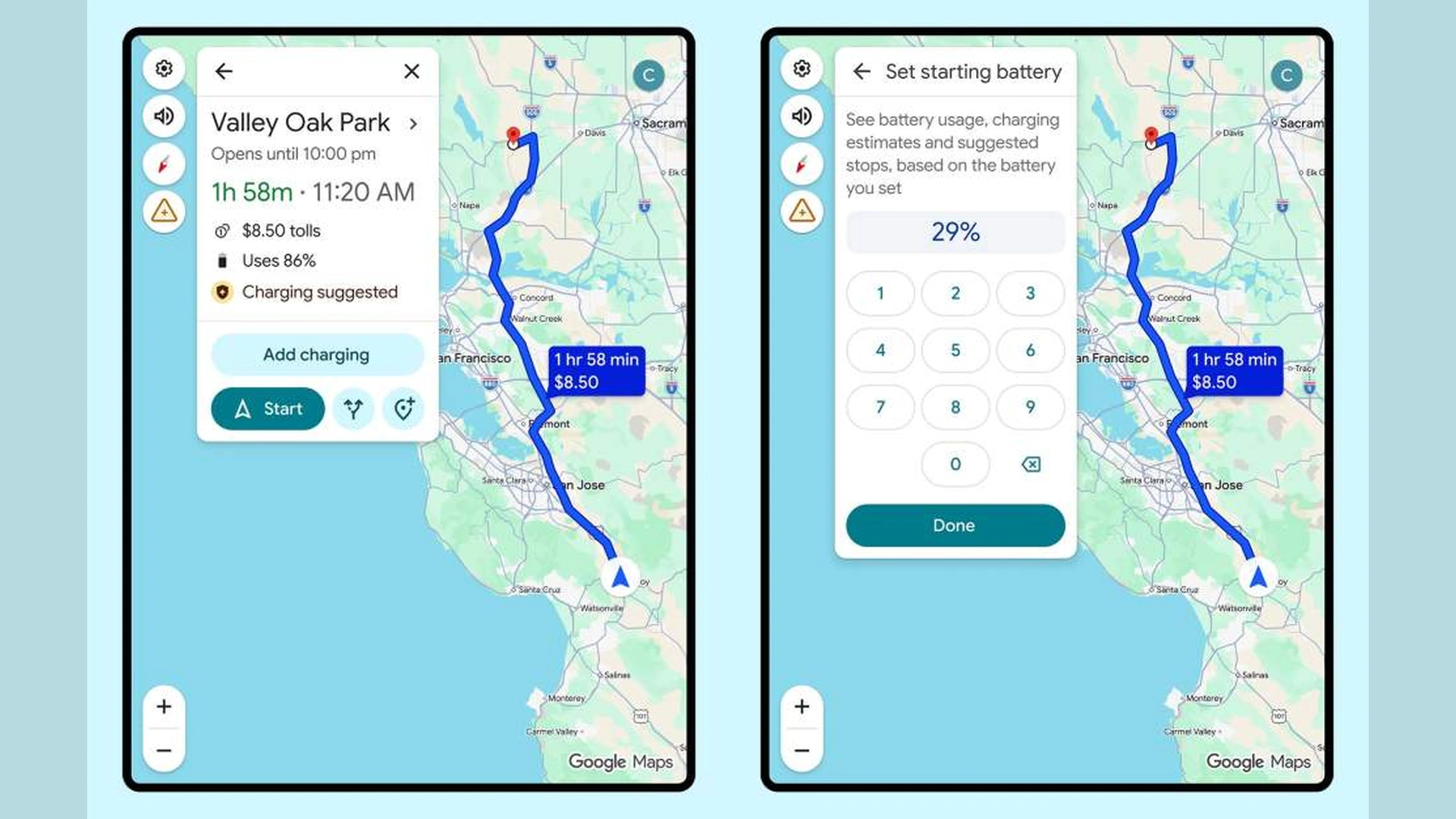
The new feature allows drivers to input their EV details into Google Maps and set a destination directly from their car. Once configured, the system calculates expected battery usage and provides precise charging recommendations along the route.
Drivers can also input their current battery level to unlock additional insights. These include suggested charging stops, estimated battery level upon arrival, and a dynamically updated estimated time of arrival that accounts for charging time. This level of detail ensures that users can plan long trips with confidence, eliminating uncertainty about whether they will reach their destination without interruption.
AI and Advanced Energy Models Power the Experience
At the core of this upgrade is a sophisticated combination of artificial intelligence and advanced energy modeling. Google Maps analyzes key vehicle specific data such as battery size and vehicle weight, then combines it with real time environmental and road conditions.
Factors like traffic patterns, elevation changes, and even weather conditions are taken into account. This comprehensive approach allows the system to generate highly accurate battery predictions tailored to each individual trip.
By leveraging both AI and real world data, Google is moving beyond generic estimates and delivering personalized navigation insights that adapt to changing conditions on the road.
Expanding Across Hundreds of EV Models and Brands
The rollout of this feature is already underway in the United States, covering more than 350 electric vehicle models across over 15 automotive brands. Google has confirmed that additional vehicles and brands will be supported in the near future, further expanding the reach of this technology.
This broad compatibility signals Google’s commitment to making EV travel more accessible and convenient for a growing number of drivers. It also reflects the increasing importance of software driven innovation in the automotive industry.
Reducing Range Anxiety and Simplifying EV Ownership
One of the most notable benefits of this update is its potential to reduce range anxiety, a key barrier for many consumers considering electric vehicles. By providing accurate battery forecasts and clear charging guidance, Google Maps empowers drivers with the confidence to take longer trips without fear of running out of power.
The integration within Android Auto also means that all this information is available directly on the car’s display, minimizing distractions and improving overall usability.
A Glimpse Into the Future of Intelligent Mobility
This latest enhancement to Google Maps highlights the growing role of AI in transforming everyday driving. As electric vehicles become more mainstream, tools that simplify navigation and energy management will play a crucial role in adoption.
With intelligent trip planning, real time adjustments, and wide vehicle compatibility, Google Maps is positioning itself as a central platform for EV drivers. The company’s continued investment in AI driven mobility solutions suggests that even more advanced features could be on the horizon.
For now, this update represents a meaningful step forward, bringing smarter, more reliable navigation to hundreds of EV models and setting a new standard for connected driving experiences.