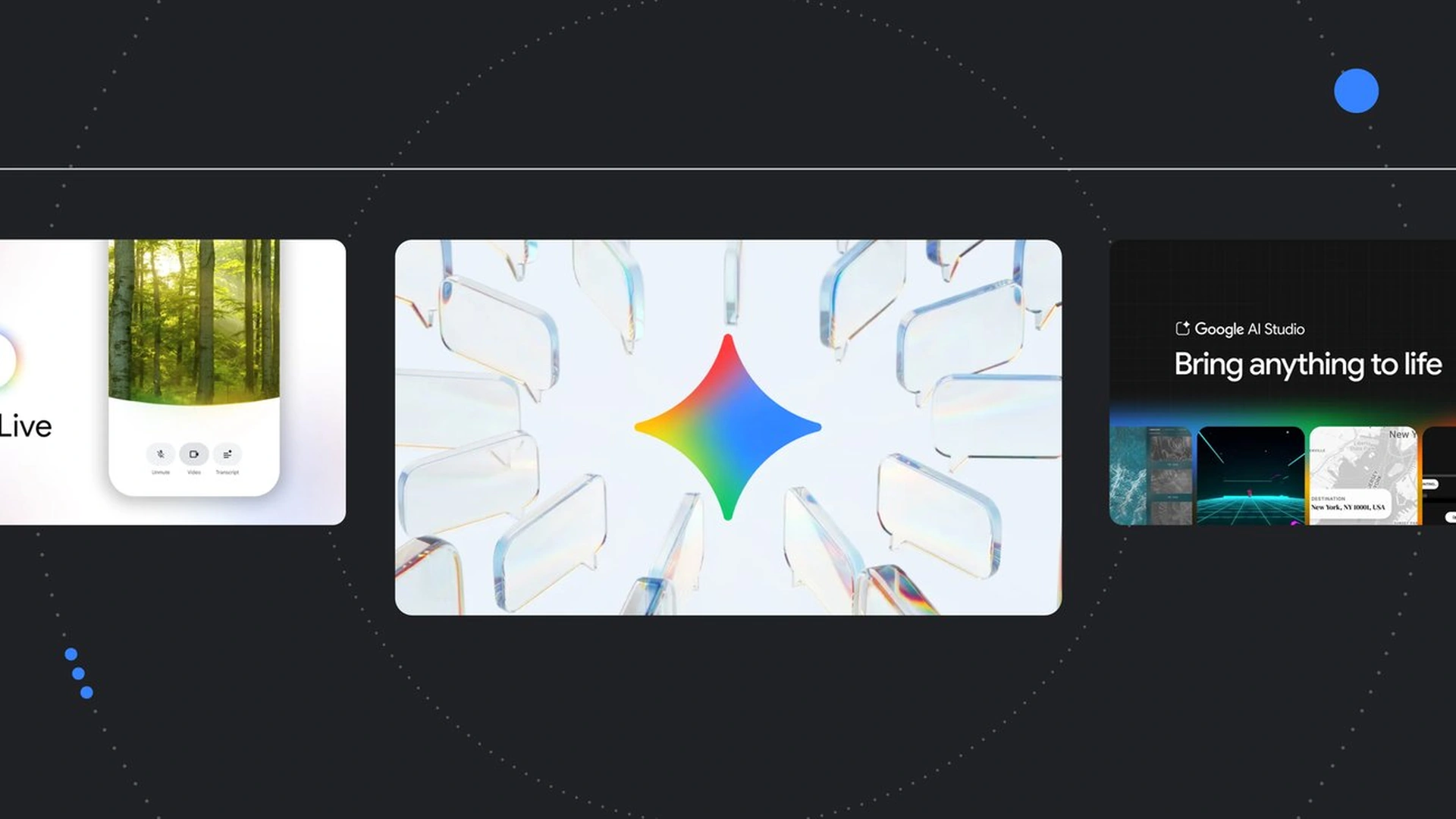
Google Unveils Powerful AI Leap in March 2026 with Gemini, Search Live and Personal Intelligence Expansion
In a significant stride toward making artificial intelligence more practical and deeply integrated into everyday life, Google has announced a sweeping set of AI advancements throughout March 2026. The updates reflect a long-standing commitment to machine learning innovation and signal a shift toward more personalized, context aware and intuitive digital experiences for users worldwide.
From expanding real time conversational search to enhancing productivity tools and introducing advanced AI models, the company’s latest developments highlight a future where AI works quietly in the background to simplify complex tasks and improve daily decision making.
Search Live Expands Globally with Real Time AI Conversations
One of the most notable announcements is the global expansion of Search Live, now available in more than 200 countries and territories where AI Mode is supported.
This feature transforms traditional search into an interactive experience. Users can engage in real time conversations using voice or camera input, allowing for hands free assistance in scenarios such as troubleshooting devices, navigating unfamiliar locations or identifying objects instantly.
The update reflects a broader shift in how users interact with information, moving from static queries to dynamic, conversational exchanges. Alongside this, Google introduced Canvas in AI Mode across the United States, offering a structured workspace for long term planning, creative writing and coding tasks within Search itself.
Gemini Integration Strengthens Productivity Across Google Workspace
Google has significantly enhanced Gemini’s capabilities across its core productivity platforms, including Docs, Sheets, Slides and Drive.
With the introduction of AI Ultra and Pro subscriptions, users can now access more advanced features that allow Gemini to analyze data across multiple sources such as files, emails and web content. This enables deeper insights, improved collaboration and more efficient workflows.
In particular, Gemini’s performance in Sheets has reached a new level, making it a powerful tool for handling complex datasets and enabling smarter decision making for both individuals and businesses.
Google Maps Gets Smarter with Conversational AI and Immersive Navigation
Google Maps has received a major upgrade powered by Gemini, introducing a new feature called Ask Maps. This conversational interface allows users to ask nuanced questions, such as finding places with specific amenities or minimal waiting times, and even complete actions like booking reservations.
Additionally, the introduction of Immersive Navigation enhances the driving experience by combining real world visuals with intuitive directions. This innovation aims to reduce stress on the road and make navigation more natural and user friendly.
Personal Intelligence Expands with User Controlled Customization
Google is pushing forward with its vision of deeply personalized AI through the expansion of Personal Intelligence across AI Mode in Search, Gemini in Chrome and the Gemini app in the United States.
This system connects securely with user data from services like Gmail and Photos to provide tailored recommendations, whether for shopping, travel planning or daily scheduling. Importantly, users retain full control over what data is shared, ensuring privacy remains central to the experience.
The emphasis on user choice and transparency marks a critical step in building trust around AI driven personalization.
Seamless Transition Tools Encourage Users to Switch to Gemini
Recognizing the growing ecosystem of AI assistants, Google has introduced new tools designed to make switching to Gemini easier.
Users can now import chat histories and memory from other AI platforms, ensuring continuity in conversations and preferences. This eliminates the need to start from scratch and positions Gemini as a more accessible and user friendly alternative in a competitive market.
Pixel Devices Receive AI Powered Enhancements in March Update
The March Pixel Drop brings a range of AI driven features aimed at improving everyday usability.
Circle to Search now allows users to analyze entire outfits from images, identifying individual items such as clothing and accessories. Meanwhile, Gemini’s Magic Cue feature can suggest restaurants directly within conversations, blending assistance seamlessly into daily interactions.
Additional updates include music recognition history through Now Playing and new functionalities for Pixel Watch, such as Express Pay and enhanced device security features.
Live Translation Expands Across Platforms and Regions
Google Translate has extended its live translation capabilities to iOS devices, while also expanding support to more countries for both iOS and Android users.
With support for over 70 languages, users can now experience real time translation directly through headphones, enabling smoother communication across language barriers. This advancement reinforces Google’s broader goal of making global communication more accessible and natural.
AI Driven Healthcare Initiatives Take Center Stage at The Check Up 2026
At its annual health focused event, The Check Up 2026, Google highlighted how AI is reshaping the future of healthcare.
The company announced a $10 million funding initiative to support new approaches to clinician education in the AI era. It is also collaborating with rural health organizations to improve care delivery, research and medical training.
Fitbit has introduced enhancements to its personal health coach, offering more personalized insights into sleep, wellness and nutrition. New features also allow users to integrate medical records, expanding the role of wearable technology in proactive health management.
Lyria 3 Pro Advances AI Generated Music Creation
Google’s latest music generation model, Lyria 3 Pro, introduces more precise control over the creative process.
Users can now generate music tracks up to three minutes long, with the ability to customize elements such as intros, verses and transitions. The model is also being made available to developers through the Gemini API and Google AI Studio, encouraging innovation in creative AI applications.
Gemini 3.1 Flash Models Deliver Faster and More Efficient AI Performance
The release of Gemini 3.1 Flash Lite and Gemini 3.1 Flash Live marks a significant improvement in speed and efficiency.
Flash Lite is designed for high performance tasks with reduced latency and cost, making it suitable for large scale deployments. Meanwhile, Flash Live enhances real time audio interactions, enabling more natural and responsive conversations.
These models are already integrated into platforms like Search Live and Gemini Live, supporting real world applications across industries.
Google AI Studio Introduces Advanced App Development with Antigravity Agent
Google AI Studio has been upgraded to simplify application development through a new coding agent known as Antigravity.
This tool allows developers to transform prompts into fully functional applications, including multiplayer experiences and integrations with real world services. The system offers deeper project understanding, faster iterations and secure handling of sensitive data such as API keys.
The update reflects a broader trend toward making software development more accessible, even for those without extensive technical expertise.
A Decade After AlphaGo, AI Continues to Shape Scientific Breakthroughs
Google also marked the tenth anniversary of AlphaGo’s historic achievement in defeating a world champion in the complex game of Go.
This milestone laid the groundwork for subsequent breakthroughs, including AlphaFold, which solved the long standing protein folding challenge. These advancements have opened new possibilities in understanding diseases and accelerating scientific discovery through AI.
A Future Defined by Context Aware and Human Centric AI
The March 2026 updates underscore Google’s vision of AI as a proactive assistant that understands context, adapts to individual needs and integrates seamlessly into daily life.
By focusing on personalization, real time interaction and cross platform integration, the company is moving closer to an ecosystem where AI not only responds to queries but anticipates needs.
As these technologies continue to evolve, they are expected to play an increasingly central role in shaping how people work, communicate and navigate the world around them.