Apple’s rise from a struggling technology firm to one of the world’s most valuable companies has long been shaped by moments of intense competition and bold leadership. A newly surfaced anecdote from Apple: The First 50 Years, a comprehensive book by David Pogue, highlights how a moment of irritation experienced by Steve Jobs played a pivotal role in the creation of the iPad. The story, based on extensive interviews and historical accounts, sheds light on how rivalry with Microsoft helped shape one of Apple’s most influential products.
A rivalry fueled innovation that reshaped personal computing
According to the book, the incident dates back to late 2005, when Jobs attended a private dinner hosted by a Microsoft engineer who was connected to his family. During the gathering, the engineer reportedly spoke at length about Microsoft’s vision for the future of computing, particularly emphasizing tablet devices powered by stylus input. This was not a one time interaction. Jobs had reportedly heard similar arguments from the same individual on multiple occasions, each time highlighting Microsoft’s progress in tablet computing.
The repeated assertions eventually became a source of frustration for Jobs. Known for his strong opinions and relentless pursuit of simplicity in design, he fundamentally disagreed with the stylus driven approach that Microsoft was advocating at the time. The book recounts that Jobs, visibly annoyed, returned home and expressed his determination to prove that a better version of a tablet device could exist.
Soon after, he brought this energy into Apple’s internal discussions. During a Monday morning meeting, Jobs reportedly told his team that Apple needed to demonstrate how a true tablet should be built. His vision was clear and uncompromising. The device had to rely on direct human interaction, not intermediary tools like a stylus. As he famously remarked, humans are already equipped with the best pointing devices their fingers.
This philosophy became a cornerstone of Apple’s product design. Instead of following the existing path, Apple chose to rethink the entire experience of interacting with a screen. The result of that vision was the iPad, which was officially unveiled in January 2010. Jobs introduced it as a revolutionary category of device positioned between smartphones and laptops, offering a new way to consume content, browse the internet, and interact with applications.
The launch of the iPad marked a significant shift in the technology landscape. While tablet computers had existed before, they had not achieved widespread success. Apple’s approach, which combined intuitive touch controls, a refined user interface, and a strong ecosystem of applications, set a new standard for the industry. The device quickly gained popularity and went on to redefine how users engaged with digital content.
Initial skepticism and eventual success
Interestingly, the reception from Microsoft’s leadership was not immediately enthusiastic. Bill Gates, who had long advocated for tablet computing, expressed reservations about the iPad’s capabilities at the time of its launch. In interviews, Gates acknowledged the importance of touch interaction but emphasized the need for a combination of input methods, including voice, pen, and physical keyboards. He suggested that devices resembling netbooks might better represent the future of mainstream computing.
Despite this skepticism, the iPad proved to be a commercial success and influenced a wide range of industries, from education to entertainment. Its impact extended beyond hardware, as it reinforced Apple’s ecosystem strategy and strengthened its position in the global market.
A complex relationship between Apple and Microsoft
The anecdote also reflects the broader relationship between Apple and Microsoft, which has evolved over decades. The two companies have shared a complex history marked by both collaboration and competition. In the early years of personal computing, Microsoft developed software for Apple’s Macintosh computers. However, tensions escalated over graphical user interface innovations, leading to a period of intense rivalry.
By the late 1990s, Apple faced significant financial challenges. When Jobs returned to the company in 1997, one of his key moves was to secure a partnership with Microsoft. As part of this agreement, Microsoft invested 150 million dollars in Apple and committed to continuing development of Microsoft Office for Mac. This partnership played a crucial role in stabilizing Apple during a critical phase in its history.
Legacy of innovation and leadership
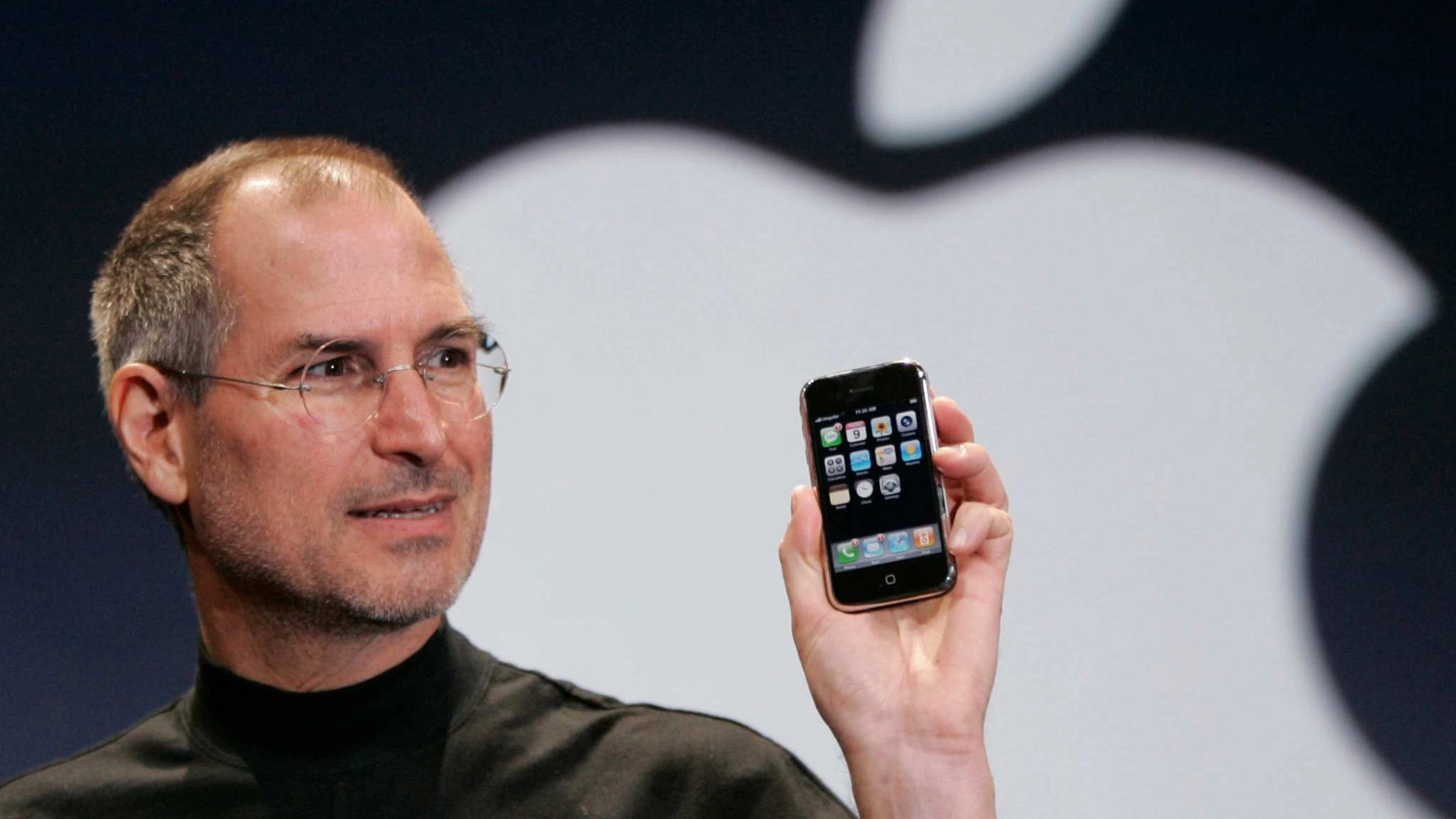
The story highlighted in Pogue’s book is one of many that illustrate how competition has driven innovation within Apple. It underscores Jobs’ ability to transform frustration into creative momentum and his unwavering belief in simplicity and user centric design. These qualities not only defined the iPad but also shaped other iconic products, including the Apple iPhone.
Under the leadership of Tim Cook, Apple has continued to build on this legacy, expanding its product lineup and strengthening its global presence. While the company’s approach has evolved, the principles established during Jobs’ era remain deeply embedded in its culture.
A deeper look into Apple’s journey
The release of Apple: The First 50 Years offers a detailed look at these defining moments, drawing from over 150 interviews with key figures who contributed to the company’s journey. The book captures not only the technological milestones but also the human stories behind them, including the intense debates, late night efforts, and bold decisions that shaped Apple’s trajectory.
As Apple marks its 50th anniversary, stories like this serve as a reminder of how innovation often emerges from unexpected sources. In this case, a moment of irritation during a dinner conversation became the catalyst for a product that would go on to influence millions of users worldwide.