
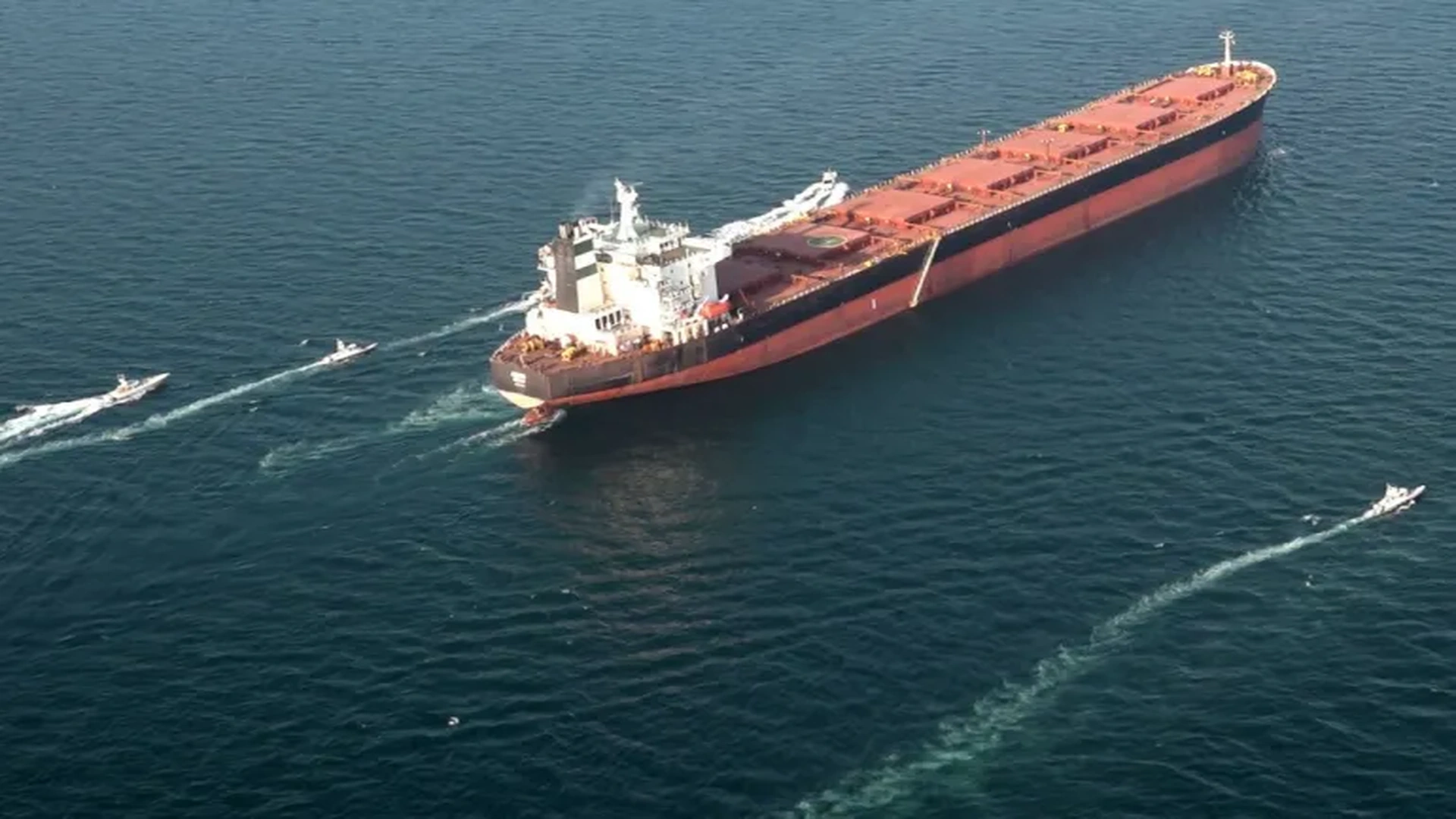
Shipping traffic through one of the world’s most critical energy corridors remained heavily disrupted on Sunday after Iranian gunboats reportedly fired warning shots at merchant vessels and reimposed strict controls in the Strait of Hormuz.
The renewed confrontation has intensified concerns over global trade, oil supply security, and the risk of a wider regional crisis.
The latest developments came after reports that Iranian authorities briefly reopened the strait before halting movement again within hours.
Radio transmissions heard by several shipowners in the area reportedly warned that the waterway had returned to “strict management and control” by Iranian armed forces.
The Strait of Hormuz is among the most strategically important sea lanes in the world, serving as a gateway for a significant share of global crude oil and liquefied natural gas shipments.
Any prolonged disruption can quickly affect shipping costs, insurance rates, and international energy markets.
Iran Warns Ships Against Approaching the Strait
Earlier in the day, Iranian state linked reports cited a warning from the naval branch of the Revolutionary Guards stating that vessels should remain at anchorage in the Persian Gulf and the Sea of Oman.
The statement said any attempt to approach the strait would be viewed as cooperation with hostile forces and could face military action.
The sharp language marked one of the most serious threats to maritime navigation in recent months and signaled a harder Iranian posture amid ongoing tensions with the United States and Israel.
Later reports also claimed that two tankers sailing under the flags of Botswana and Angola were turned back after trying to transit the strait.
Iranian media described the passage attempt as unauthorized.
Global Markets Watch Energy Supply Risks
The crisis has drawn immediate attention from global markets because the Strait of Hormuz handles a major portion of seaborne oil exports from producers across the Gulf.
Any delay or closure can tighten supply chains and trigger volatility in crude prices.
Shipping analysts say uncertainty alone can increase freight charges, tanker insurance premiums, and delivery delays even before physical shortages appear.
Import dependent nations in Asia and Europe are expected to monitor the situation closely.
Energy traders are also watching whether alternative export routes through pipelines or other regional ports can absorb pressure if maritime restrictions continue.
UAE and UK Hold High Level Security Talks
Against that backdrop, the United Arab Emirates and the United Kingdom held high level discussions on the worsening Gulf security situation.
According to official statements, Sheikh Abdullah bin Zayed Al Nahyan met Yvette Cooper in Abu Dhabi to review recent developments, including missile attacks attributed to Iran and their impact on regional stability, international navigation, energy flows, and the wider global economy.
The diplomatic engagement underlines growing concern among partners in the region that maritime disruptions could rapidly expand into a broader economic shock.
US Iran Talks Continue but Major Gaps Remain
Even as military tensions rose, diplomatic signals suggested negotiations between United States and Iran have not fully collapsed.
Turkey Foreign Minister Hakan Fidan said both sides still have the will to continue talks aimed at ending the conflict, though disagreements remain.
Iranian officials also said progress had been made in negotiations, while stressing that a large distance still separates the two sides on key issues.
The future of Iran’s nuclear programme remains one of the central sticking points.
Iranian President Masoud Pezeshkian said Donald Trump had no justification to deny Iran what Tehran describes as its nuclear rights.
Internal Security Crackdown Intensifies in Iran
Iran also announced a widening internal security campaign.
Reports said 51 people were arrested in Kerman over alleged intelligence gathering, sabotage planning, and inciting unrest linked to the United States, Israel, and the United Kingdom.
Separately, authorities reportedly detained four individuals, including two foreign nationals, over accusations of importing Starlink equipment, which is restricted inside Iran.
The arrests reflect Tehran’s growing concern over espionage, communications control, and domestic unrest during a period of sustained geopolitical pressure.
Military Signals Raise Fears of Prolonged Crisis
Iranian military commanders also claimed that missile and drone launcher systems were being replenished at a faster pace than before the conflict.
Such statements are likely intended both for domestic audiences and as a strategic signal to foreign adversaries.
Meanwhile, fighting beyond Iran’s borders continued to cast a shadow over the region.
Reports from southern Lebanon said one Israeli soldier was killed and several others wounded during combat operations, despite a ceasefire environment that remains fragile.
What Comes Next for the Hormuz Strait
The immediate question for markets and governments is whether traffic through the Strait of Hormuz can safely resume.
A sustained blockade or repeated military interference would place heavy pressure on global oil supply chains and deepen already elevated geopolitical risk.
Diplomats are expected to push for de escalation in the coming days, but with military warnings, stalled negotiations, and regional mistrust all in play, the situation remains highly volatile.
For now, the world’s attention is fixed on a narrow waterway whose stability often shapes far larger economic and political outcomes.