
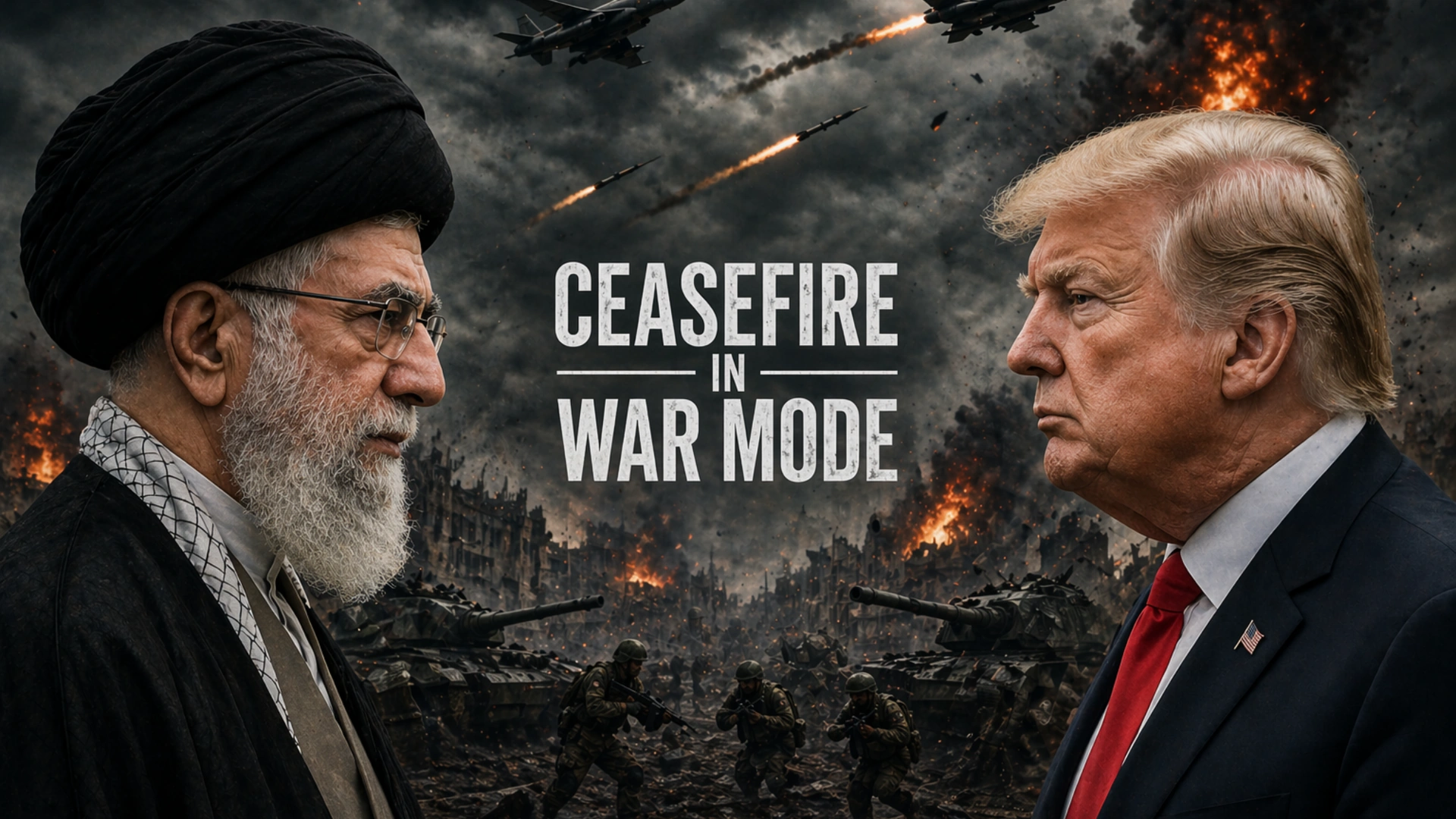
The fragile ceasefire between the United States and Iran entered a new phase on Tuesday after the White House confirmed that Vice President JD Vance will not travel to Pakistan for the proposed negotiations. The announcement came shortly after Donald Trump said he would extend the ceasefire while waiting for what he described as a unified proposal from Tehran.
The developments underscored the uncertainty surrounding the diplomatic track even as both sides publicly kept the door open for talks. Washington signaled that military and economic pressure would continue, while Iranian officials questioned the sincerity of the latest American move.
White House confirms Vance trip will not happen for now
The White House said JD Vance had not departed for Islamabad and would not be travelling at this stage. No fresh timeline was provided for a possible future visit.
Vance had earlier been expected to join high level discussions in Pakistan aimed at preventing a return to direct confrontation between Washington and Tehran. Reports suggested the trip was paused after Iran did not formally respond to American negotiating positions.
The cancellation or delay of the visit is seen as a setback for efforts to rapidly move talks forward. Pakistan had been preparing for a possible second round of dialogue involving senior delegations from both countries.
Trump extends ceasefire but warns pressure remains
In a dramatic late night announcement, Donald Trump said he would extend the ceasefire until Iran submits a consolidated proposal and discussions are completed.
At the same time, Trump indicated that the United States would maintain its naval blockade and broader pressure campaign. His statement suggested the ceasefire was not a sign of reduced leverage, but rather a tactical pause to test whether diplomacy could succeed.
Hours before announcing the extension, Trump had said it was highly unlikely he would prolong the truce, making the reversal notable.
The ceasefire had been due to expire amid growing fears that military action could resume within hours.
Tehran rejects American narrative
Iranian officials responded with skepticism and anger. According to reports carried by regional media, Tehran said it had not requested any ceasefire extension and dismissed the American move as politically motivated.
An adviser linked to Iranian parliament speaker Mohammad Bagher Ghalibaf reportedly described the extension as meaningless and warned it could be a ploy for a surprise attack.
Iran also renewed criticism of the US naval blockade, calling it an act of war. Foreign Minister Abbas Araghchi said seizing commercial vessels and restricting Iranian ports violated the spirit of the truce.
These statements highlight how deeply mistrust continues to shape the crisis.
Pakistan emerges as a key intermediary
Pakistan has become an unexpected diplomatic center in the latest phase of the conflict. Prime Minister Shehbaz Sharif thanked Trump for accepting what he said was a request from Pakistan to extend the ceasefire.
Sharif also said Islamabad would continue efforts toward a negotiated settlement. Pakistan’s military chief Asim Munir was also mentioned by Trump as part of the outreach effort.
The role of Pakistan reflects a broader regional desire to prevent escalation that could destabilize energy markets, maritime trade, and security across the Gulf and South Asia.
Oil prices rise as markets doubt peace prospects
Despite the ceasefire extension, global markets remained uneasy. US crude prices rose sharply as traders assessed the risk that talks may fail and conflict could resume.
Energy investors are closely watching the Strait of Hormuz, one of the world’s most important oil transit routes. Any disruption there can immediately affect shipping costs and global crude prices.
Iranian commanders also issued warnings to Gulf neighbors, saying regional oil production could face consequences if their territory is used for attacks against Iran.
Sanctions and military threats continue
Even while discussing diplomacy, Washington imposed new sanctions targeting individuals and companies allegedly linked to weapons procurement for Iran. Entities in Iran, Turkey and the United Arab Emirates were reportedly included.
Trump also warned that fresh bombing raids remained possible if negotiations collapse. Such remarks reinforced the sense that the ceasefire is conditional and could unravel quickly.
The combination of sanctions, military deployments, and open threats has complicated the diplomatic atmosphere.
What happens next
The next phase depends largely on whether Iran sends negotiators and whether both sides can agree on a framework for talks. Tehran has indicated it may consider attending discussions if the United States drops what it calls pressure tactics and threats.
For now, the ceasefire has bought time, but not certainty. The White House confirmation that Vance will not travel immediately shows that even basic arrangements for diplomacy remain unsettled.
The conflict has moved from missiles and maritime seizures to a contest of leverage, messaging, and timing. Whether that transition leads to peace or renewed confrontation may become clear in the coming days.
Why this matters globally
Any escalation between the United States and Iran could affect oil prices, shipping lanes, financial markets, and security partnerships across the Middle East. With Pakistan trying to mediate and Gulf states watching closely, the outcome has consequences well beyond Washington and Tehran.
For now, the guns may be quieter, but the crisis is far from over.