
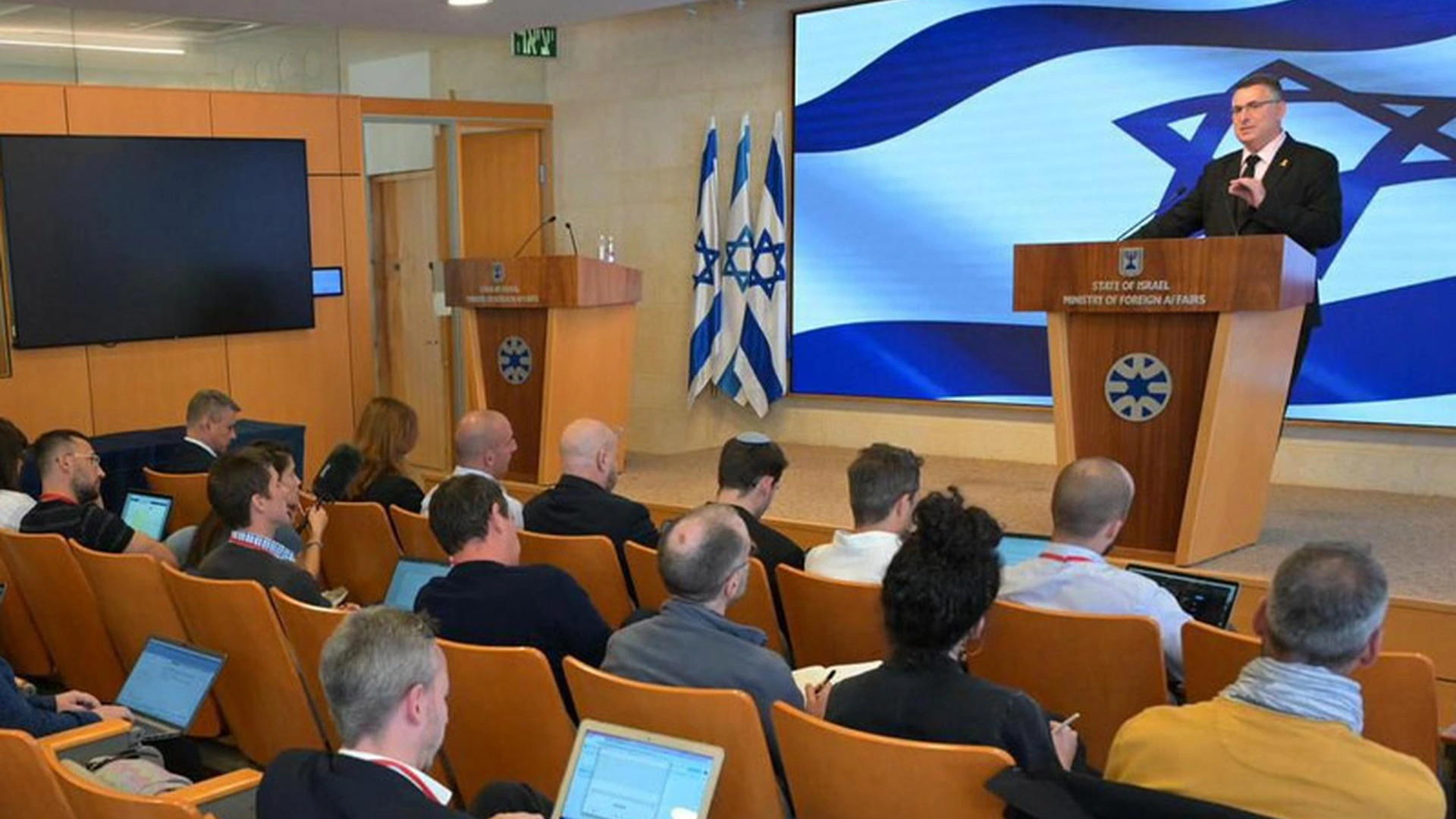
Israel’s Foreign Minister Gideon Sa’ar has strongly condemned the destruction of a statue of Jesus in southern Lebanon by an Israeli soldier, describing the act as grave, disgraceful, and completely opposed to the values Israel says it upholds.
The controversy emerged after an image circulated on social media showing a soldier using a sledgehammer to smash a Christian religious statue. The photograph was shared by a Lebanese journalist and was later authenticated by the Israel Defense Forces, confirming the incident had taken place.
Sa’ar responded publicly on X, where he issued one of the strongest condemnations from a senior Israeli official in recent months over misconduct involving a religious site or symbol during military operations in Lebanon.
Foreign minister issues apology to Christians worldwide
In his statement, Sa’ar said the damage caused to the Christian religious symbol was serious and shameful. He praised the Israeli military for acknowledging the incident, condemning the behavior, and launching an investigation into what happened.
He also said he expected strict disciplinary measures against the soldier responsible.
Sa’ar added that the act was ugly and stood in direct contradiction to the principles Israel claims to defend, including respect for different religions and sacred symbols.
The foreign minister went further by issuing a direct apology to Christians offended by the incident.
He said Israel respects religious diversity and supports tolerance among faith communities, adding that the government regretted the damage and the hurt caused to Christians by the destruction of the statue.
Image from southern Lebanon sparks backlash
The incident gained attention after the image was widely shared online. In the photograph, a uniformed soldier can be seen striking the statue of Jesus with a heavy hammer. The location was identified as southern Lebanon, an area that has seen repeated military tension, cross border exchanges, and Israeli operations in recent months.
Because the image involved a revered Christian figure, it quickly triggered criticism on social media and concern among religious communities.
Christian groups across the Middle East often treat such symbols not only as sacred objects of worship but also as markers of historical identity and community presence. Damage to these sites or statues can therefore carry emotional and political significance far beyond the immediate act itself.
IDF confirms authenticity and opens investigation
The Israel Defense Forces confirmed the authenticity of the image after questions were raised online. Military authorities also stated that the matter was being investigated.
The confirmation was significant because it prevented speculation over whether the image was manipulated or falsely attributed. By acknowledging the event publicly, the military moved quickly to address growing criticism.
While the IDF has not yet announced the identity of the soldier or any disciplinary action, Sa’ar’s remarks indicate pressure from senior political leadership for firm consequences.
Investigations involving military conduct in operational zones can include reviews of command responsibility, unit discipline, and whether the act violated military ethics codes.
Religious symbolism in conflict zones remains highly sensitive
Incidents involving churches, mosques, temples, cemeteries, or sacred symbols often draw intense reactions during regional conflicts. In Lebanon, where multiple religious communities live side by side, Christian heritage sites hold deep historical and cultural importance.
Any perceived attack on religious identity can inflame already tense political conditions and deepen mistrust between communities.
That is why Sa’ar’s language was unusually direct. Rather than limiting his remarks to a procedural response, he described the act in moral terms and publicly apologized.
Diplomatic observers note that such statements are often aimed not only at domestic audiences but also at international partners concerned about religious freedom and civilian sensitivities during military operations.
Why the apology matters internationally
Israel maintains diplomatic and strategic ties with countries that place strong emphasis on protection of religious heritage, particularly Christian communities and sacred sites across the Middle East.
A public apology from the foreign minister may be seen as an effort to reassure allies and prevent wider diplomatic fallout.
The incident also comes at a time when regional scrutiny of military conduct remains high. Images from conflict zones now spread globally within minutes, making rapid official responses increasingly important.
By condemning the act and supporting an investigation, Sa’ar appeared to signal that misconduct targeting religious symbols would not be accepted as normal battlefield behavior.
Questions remain over accountability
Although the apology has been welcomed by some observers, attention is now likely to turn toward the outcome of the military investigation.
Critics will want to know whether disciplinary action follows, whether commanders were aware of the behavior, and what steps may be taken to prevent similar incidents in the future.
Cases involving symbolic damage can become tests of institutional credibility. Public statements can ease outrage temporarily, but lasting impact often depends on transparent accountability.
A symbolic incident with wider consequences
The smashing of the Jesus statue may appear to involve a single soldier and a single act, but its consequences extend further. In a region where faith, identity, and politics remain closely connected, damage to sacred symbols can resonate across borders.
Sa’ar’s condemnation reflects recognition of that reality. By calling the act shameful and contrary to national values, Israel’s foreign minister sought to distance the state from the soldier’s conduct and reassure those offended.
Whether that message is enough may depend on what happens next, as investigators determine responsibility and authorities decide how to respond.