
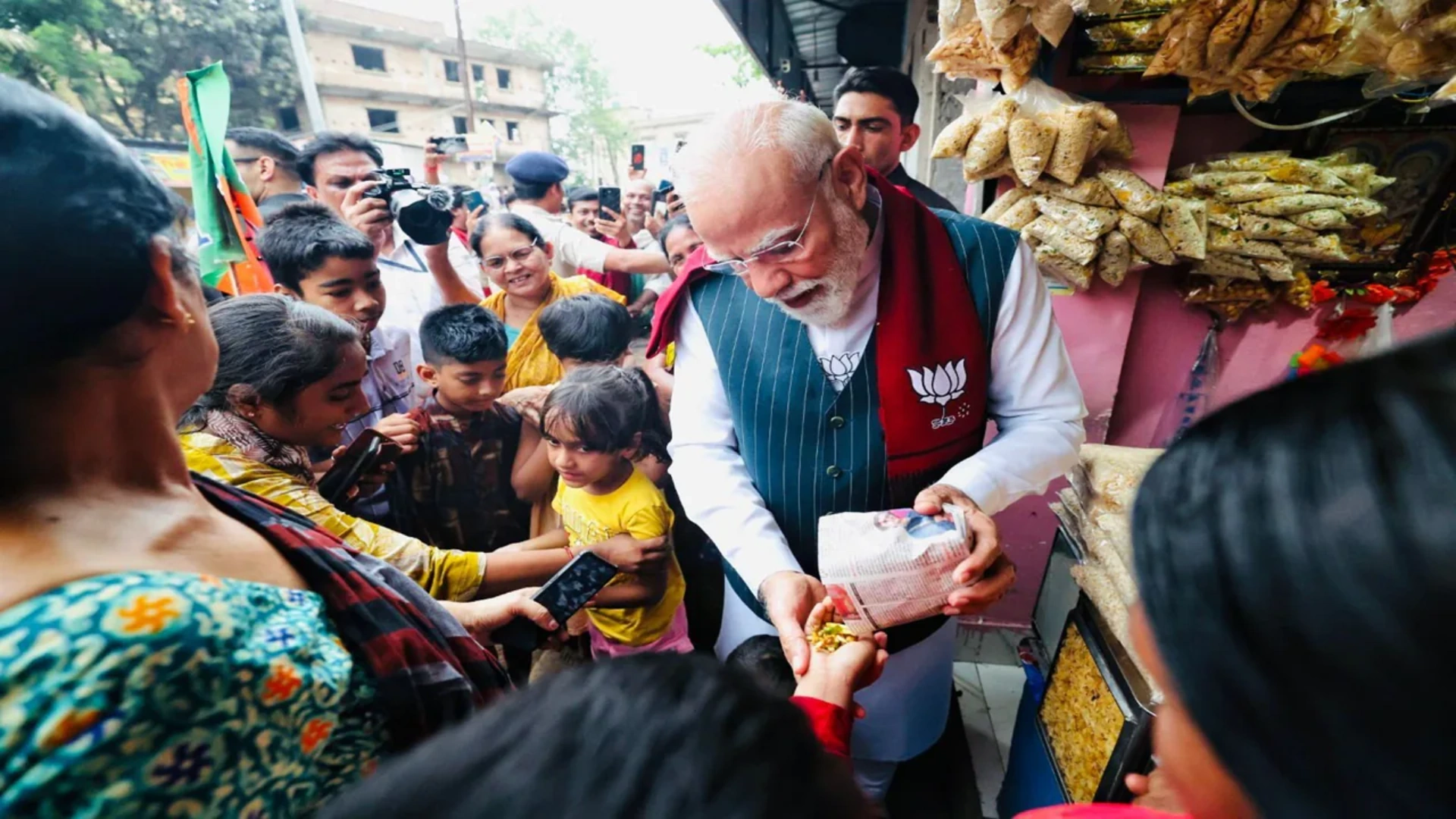
West Bengal chief minister Mamata Banerjee on Monday dismissed Prime Minister Narendra Modi’s widely discussed roadside jhalmuri stop in Jhargram, calling the episode “all drama” as political campaigning intensifies ahead of the state assembly elections.
Her remarks came a day after the Prime Minister made an unscheduled stop at a street food stall during a campaign visit in Jhargram, where he purchased jhalmuri, one of Bengal’s most familiar and popular snacks. The moment quickly drew attention on social media and became a talking point in the heated election atmosphere.
Mamata Banerjee questions spontaneity of the stop
Addressing a poll rally in Murarai assembly constituency in Birbhum district, Banerjee questioned whether the roadside interaction had been spontaneous.
She said the entire sequence appeared staged and raised doubts over how cameras were already present if the stop had truly been unplanned. She also referred to visuals showing the Prime Minister carrying a Rs 10 note, suggesting the event had been carefully prepared in advance.
Without directly naming Modi, Banerjee said the public could judge for themselves whether such an incident was believable during a high security election campaign.
Her criticism reflects the sharp rhetoric that has defined the contest between the ruling All India Trinamool Congress and the Bharatiya Janata Party in one of the country’s most politically significant states.
PM Modi’s jhalmuri interaction becomes campaign highlight
On Sunday, after concluding his public address in Jhargram, Modi walked toward a local food stall and asked the vendor to serve him jhalmuri.
Jhalmuri is a popular Bengali street snack made primarily from puffed rice mixed with ingredients such as chopped onions, green chillies, mustard oil, spices, and other local flavors. It remains a staple snack across towns and cities in West Bengal.
As the vendor prepared the item, Modi was heard asking about the price of the snack. He then reached into the pocket of his Nehru jacket to pay.
During the brief exchange, the vendor asked whether he eats onions. Modi replied that he does eat onions, adding a light hearted political remark that he does not like “irritating people.” The comment drew reactions from supporters present at the venue.
The scene was later shared widely online, where supporters praised the gesture as a simple public interaction while critics described it as campaign optics.
Election atmosphere sharpens in crucial Bengal battle
The exchange between Banerjee and Modi comes at a decisive moment in the West Bengal assembly election campaign, where both parties are working aggressively to influence undecided voters.
West Bengal remains one of the most closely watched political battlegrounds in India. The state carries strategic importance because of its size, parliamentary strength, and symbolic value in national politics.
Banerjee, who has built her political identity around Bengali regional pride and welfare politics, is seeking another mandate. Meanwhile, the BJP is attempting to expand its footprint further in eastern India through a high intensity campaign led by top national leaders.
Campaign narratives in Bengal often move quickly from policy promises to symbolic public moments, and the jhalmuri stop has now entered that larger contest.
Polling schedule announced for two phases
Voting for the West Bengal assembly elections will take place in two phases.
The first phase of polling, covering 152 seats, is scheduled for Thursday. The second and final phase for the remaining 142 constituencies will be held on April 29.
Counting of votes is set for May 4.
With polling days approaching, both the TMC and BJP are expected to intensify outreach efforts through rallies, roadshows, local meetings, and digital messaging campaigns.
Symbolism and street politics in Bengal campaigns
Food, language, and local identity have long played an important role in West Bengal politics. Public leaders frequently use regional symbols to connect with voters, whether through references to culture, literature, festivals, or everyday life.
In that context, jhalmuri is more than a snack. It represents familiar street culture and ordinary daily life across Bengal. Political appearances involving such symbols often attract outsized attention because they seek to project relatability and cultural connection.
That is also why Banerjee’s criticism was swift. By calling the episode drama, she aimed to challenge the authenticity of the Prime Minister’s gesture and frame it as political theatre rather than a genuine public moment.
High stakes final stretch before voting
As the campaign enters its final stretch, the Bengal election remains a contest shaped by emotion, symbolism, and fierce political messaging.
For voters, the coming days will be dominated by speeches, promises, accusations, and attempts to build trust. For political parties, every image, every statement, and every roadside interaction can become part of the larger narrative.
The jhalmuri stop may have lasted only a few minutes, but it has already become one of the most talked about moments of the campaign, highlighting how even small gestures can carry major political weight in a high stakes election season.