
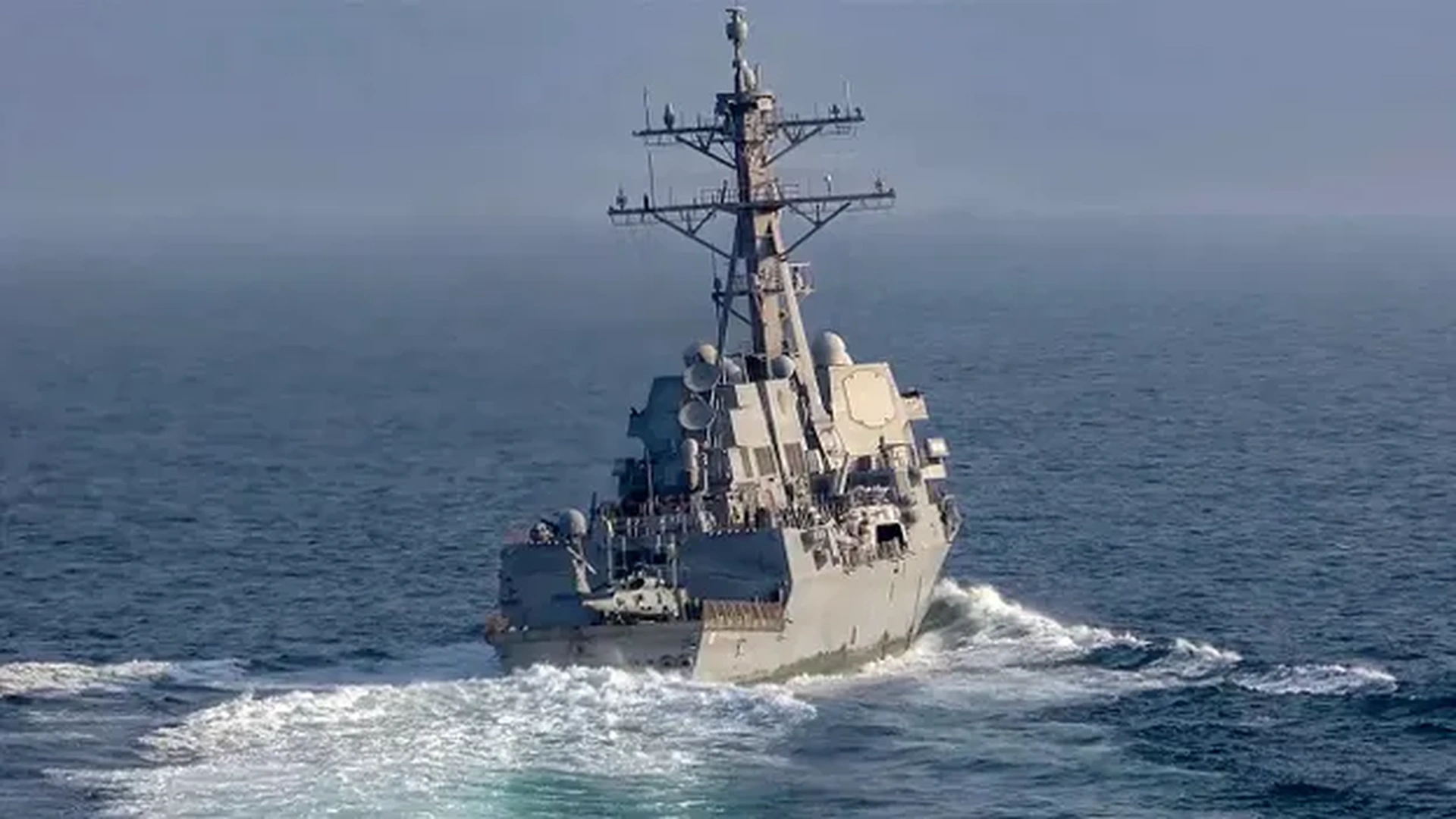
A sharp new confrontation between the United States and Iran unfolded near one of the world’s most sensitive maritime chokepoints after the US Navy fired upon and seized an Iranian flagged cargo vessel near the Strait of Hormuz. The incident has intensified already fragile regional tensions and cast fresh doubt over planned diplomatic talks between Washington and Tehran.
According to statements from US officials, the vessel identified as Touska was intercepted after allegedly ignoring repeated warnings from American forces. Iran has condemned the action as a serious violation and warned that retaliation would follow.
Dramatic Naval Interception In Strategic Waters
The United States Central Command said guided missile destroyer USS Spruance intercepted the Iranian flagged vessel in waters linked to the Gulf of Oman and the northern Arabian Sea while it was reportedly heading toward Bandar Abbas, one of Iran’s key ports.
US officials said the ship was informed multiple times that it was violating the American naval blockade targeting Iranian maritime activity near the Strait of Hormuz. After what Washington described as six hours of non compliance, the destroyer ordered the vessel to clear its engine room before opening fire.
Several rounds from the warship’s five inch deck gun reportedly struck the engine section, disabling propulsion and bringing the vessel to a halt. American Marines later boarded the ship and took control of it without announcing casualties.
US Central Command also released video footage showing radio warnings issued to the vessel before the operation began.
Donald Trump Defends Action Against Vessel
US President Donald Trump strongly defended the seizure, saying the ship had been given fair warning and chose not to stop.
He said the vessel attempted to breach the US naval blockade and claimed American forces stopped it by striking the engine room. Trump further stated that the Touska was already under US Treasury sanctions due to what he called a prior history of illegal activity.
The US administration has not yet publicly detailed what cargo was aboard the vessel, but officials said it remains in American custody while inspections continue.
Iran Calls Operation Armed Piracy
Iran reacted angrily, accusing Washington of carrying out an unlawful attack on a civilian vessel. Iranian officials described the boarding and seizure as an act of armed piracy and said the move violated the spirit of an already fragile ceasefire.
Tehran also announced it would not participate in the next round of talks with the United States that had reportedly been expected in Islamabad. The cancellation signals another setback for efforts to calm weeks of military and political confrontation.
Iranian media sources also claimed Iranian forces targeted US naval assets with drones after the seizure, though independent confirmation of those claims was not immediately available.
Strait Of Hormuz Faces Renewed Uncertainty
The incident has raised new alarm over the Strait of Hormuz, one of the most critical energy transit routes in the world. Roughly one fifth of global oil shipments move through the narrow waterway during normal trading conditions.
Shipping traffic through the strait remained uncertain after mixed signals over the weekend. Iranian authorities initially suggested vessels could continue passing through the route before later moving to halt much of the traffic.
Any prolonged disruption could quickly affect oil markets, freight insurance costs and global supply chains. Energy traders and shipping companies are closely monitoring developments as military rhetoric escalates.
Peace Talks In Jeopardy
The confrontation comes just days before a reported two week ceasefire period between the two sides is due to expire. Hopes for diplomacy have weakened as both nations trade accusations and threats.
Trump warned that the United States could strike major Iranian infrastructure if negotiations fail. Iranian officials, meanwhile, rejected claims that they had agreed to dismantle their nuclear programme or surrender enriched uranium stockpiles.
With talks suspended and military incidents increasing, prospects for an immediate diplomatic breakthrough appear limited.
Why This Matters Globally
The seizure of an Iranian flagged vessel by US forces is more than an isolated naval episode. It marks a serious escalation in a region where even small incidents can trigger wider conflict.
The Strait of Hormuz remains essential to global commerce, especially crude oil exports from the Middle East. Any sustained disruption there can influence fuel prices from Asia to Europe and North America.
For world markets, the crisis is a reminder that geopolitical flashpoints can rapidly become economic shocks.
What Comes Next
Attention now turns to whether Iran responds militarily, economically or through regional proxies. The coming days may also determine whether the ceasefire fully collapses or if back channel diplomacy can revive negotiations.
For now, the seizure of the Touska has pushed US Iran tensions into a dangerous new phase, with global markets and regional powers watching closely.