
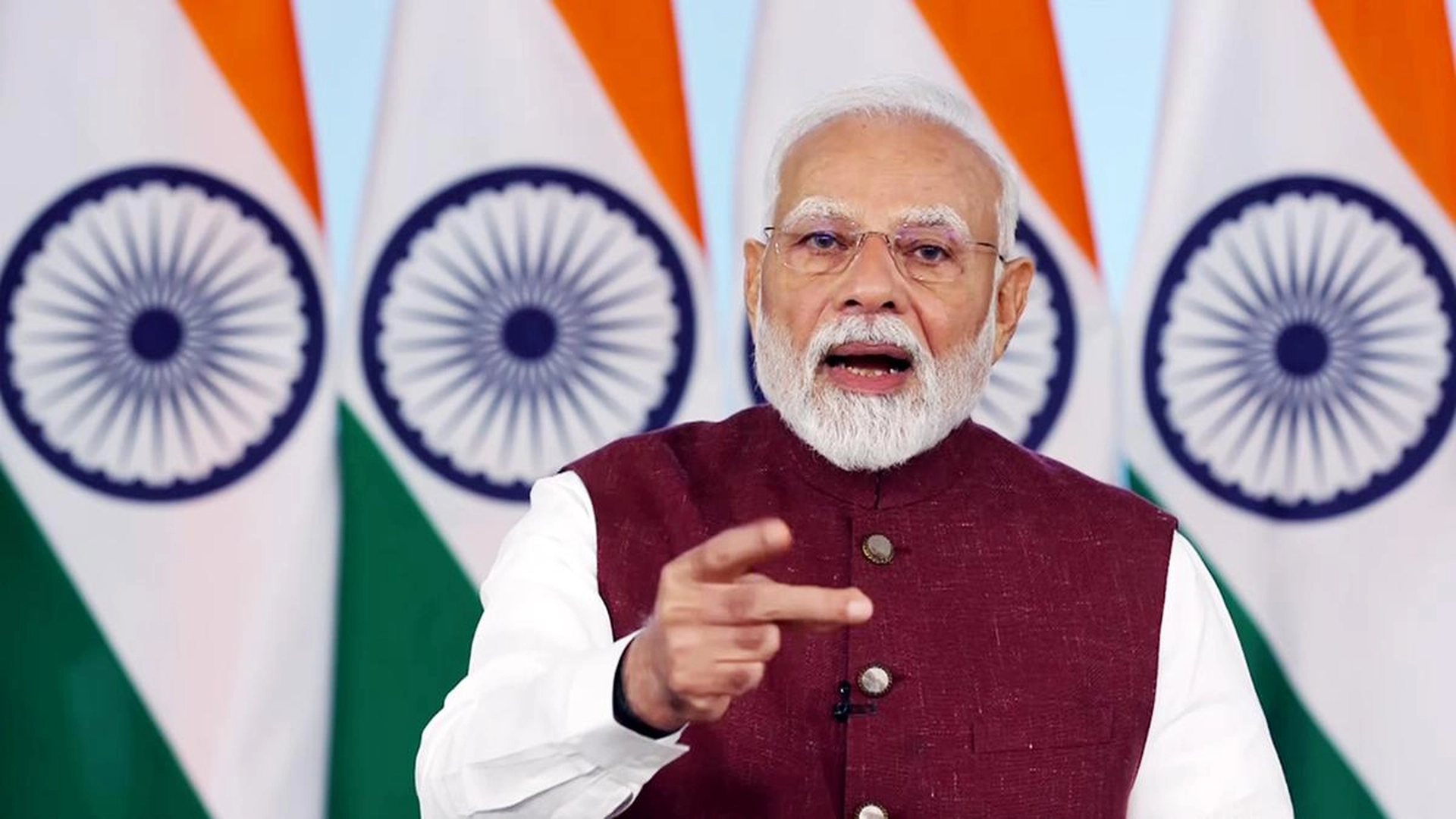
Prime Minister Narendra Modi on Saturday launched a sharp political attack on the Opposition after the Women’s Reservation Bill failed to secure the required two thirds majority in the Lok Sabha. Addressing the nation in a televised speech, Modi said parties opposing the legislation had denied Indian women a historic opportunity and would face public judgment for blocking the measure.
The bill, officially aimed at reserving 33 percent seats for women in the Lok Sabha and state assemblies, was seen as one of the most significant constitutional reforms proposed in recent years. However, despite support from the ruling alliance, the government fell short of the numbers needed for passage in Parliament.
PM Modi Expresses Disappointment Over Defeat
In his national address, Modi said he shared the disappointment felt by women across the country after the bill could not be passed. He described the legislation as an honest effort to strengthen women’s participation in national politics and said the setback was painful for millions who expected change.
The Prime Minister stated that while the government may not have secured the required parliamentary numbers, it had the support of women voters across India. He framed the failed bill not as a political defeat, but as a delayed step in a larger movement for women’s empowerment.
According to voting figures in the Lok Sabha, 298 MPs supported the bill while 230 voted against it. A total of 352 votes were required for the two thirds majority needed to amend the Constitution.
Strong Attack On Congress And INDIA Bloc Allies
Modi accused the Congress and several opposition parties, including the Trinamool Congress, DMK and Samajwadi Party, of putting political interests above women’s rights. He alleged that dynastic parties feared the rise of new women leaders who could challenge established political families.
The Prime Minister claimed many opposition parties were comfortable supporting women’s empowerment in speeches, but resisted it when it came to real legislative change. He said voters, especially women, would remember who stood with the bill and who blocked it.
He also accused the Congress of spreading misinformation on related issues such as delimitation and electoral reforms, calling the party anti reform and driven by negative politics.
Why The Bill Was Considered Historic
The proposed constitutional amendment sought to increase Lok Sabha seats from 543 to as many as 816 after a delimitation exercise based on the 2011 Census. This expansion was designed to enable one third reservation for women without sharply reducing existing constituencies.
The legislation also aimed to introduce similar reservations in state and Union Territory assemblies. If passed, it would have marked one of the largest structural changes in Indian electoral politics since independence.
Supporters argued that the bill would create long term representation for women in decision making institutions, strengthen policy diversity, and accelerate social progress.
Opposition Concerns And Political Debate
Opposition parties had raised multiple concerns over the proposal, including implementation timelines, delimitation impact, representation formulas, and broader electoral balance. Critics argued the government should have built wider consensus before introducing such a major constitutional amendment.
Some parties also questioned whether the bill should include sub quotas for women from backward and minority communities. Others accused the government of using the issue for political messaging ahead of future elections.
The defeat of the bill has now intensified political confrontation, with both sides seeking to shape public perception of what happened in Parliament.
Women Voters Likely To Become Central Political Force
The failure of the bill may now become a major campaign issue in upcoming state elections and future national contests. Women voters have become one of the most influential electoral groups in India, with rising turnout and increasing policy focus from all parties.
By making the issue central to his speech, Modi signaled that the BJP intends to take the women’s representation debate directly to the electorate. Opposition parties are also expected to defend their position and present alternative frameworks.
What Happens Next
The government can choose to reintroduce a revised version of the bill in a future parliamentary session, seek broader consensus, or make it a major election promise. Political observers believe the issue is far from over and could define legislative debates in the years ahead.
For now, the failed vote has created one of the biggest political flashpoints of 2026, with both the ruling alliance and Opposition preparing for a prolonged battle over reform, representation, and women’s leadership in Indian democracy.