
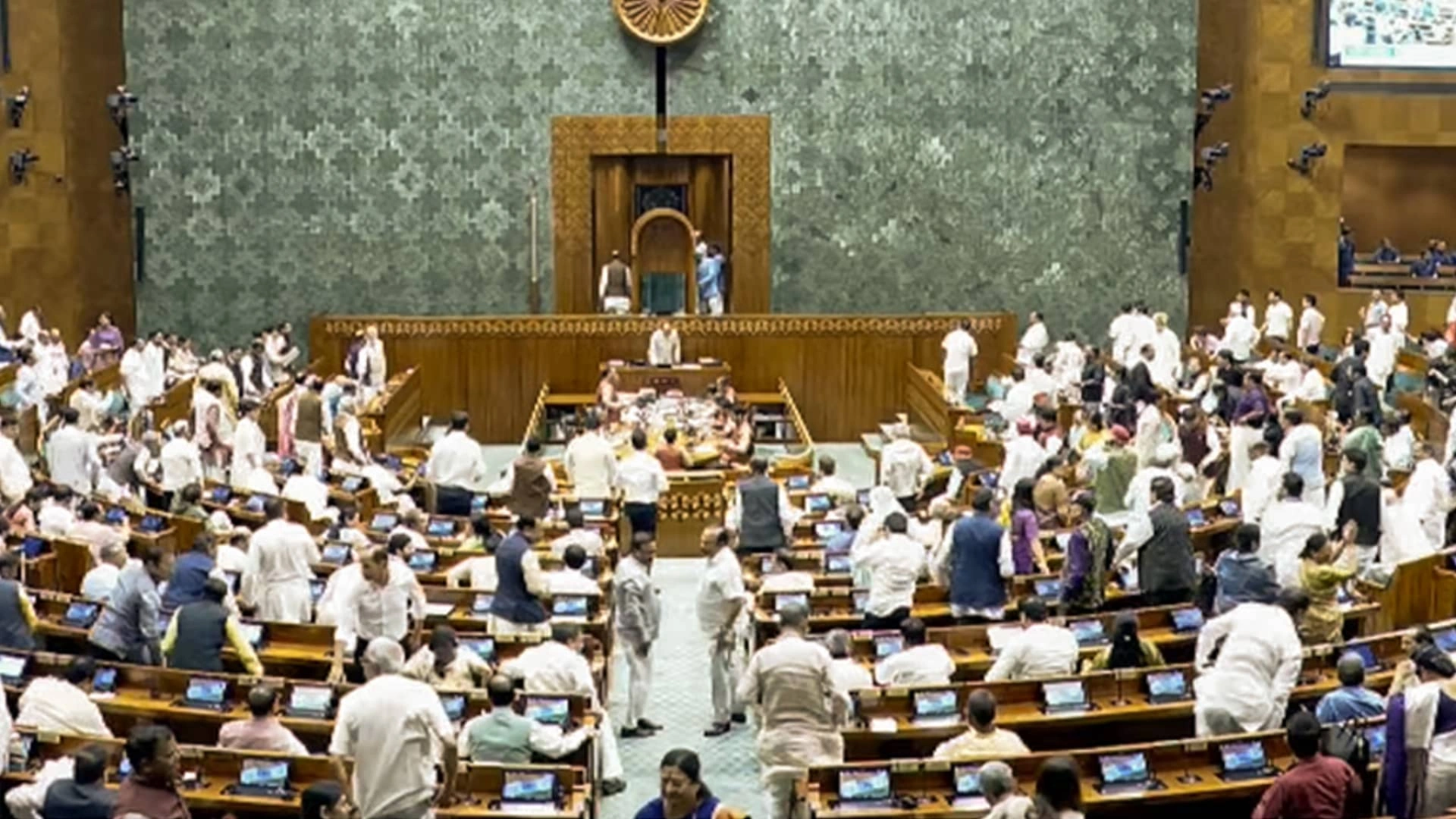
New Delhi: In a rare parliamentary setback for the Narendra Modi led National Democratic Alliance government, the Constitution Amendment Bill linked to women’s reservation failed to pass in the Lok Sabha after falling short of the required two thirds majority. The defeat marks the first time since 2014 that the government has been unable to secure passage of a bill in Parliament, turning a legislative contest into a major political moment.
The proposed legislation aimed to provide 33 percent reservation for women in the Lok Sabha and state assemblies through an expanded House structure tied to a future delimitation exercise. While the government projected the bill as a historic push for women’s representation, opposition parties argued that the proposal was fundamentally linked to a controversial redesign of India’s electoral map.
Historic Defeat Turns Into Political Flashpoint
The failure of the bill immediately triggered a fresh confrontation between the ruling Bharatiya Janata Party and opposition parties. The NDA secured 298 votes, significantly below the threshold required for a constitutional amendment.
Although the numbers suggested the bill faced an uphill battle from the beginning, the government still chose to proceed with voting. This has led political observers to debate whether the move was a strategic calculation rather than a pure legislative attempt.
By forcing a formal vote, the government ensured that every Member of Parliament’s position was placed on record. In election politics, such a vote can become a powerful campaign tool, allowing parties to frame opponents as obstructing women’s empowerment.
Government Says Opposition Blocked Women’s Rights
Prime Minister Narendra Modi used the debate to argue that intent mattered more than political slogans. He said if opposition parties genuinely wanted women’s reservation, there should have been no hesitation in supporting the bill.
After the defeat, Parliamentary Affairs Minister Kiren Rijiju accused the opposition of missing a historic opportunity to honour women of the country. He said the government would continue its effort until reservation for women in legislatures becomes a reality.
Union Home Minister Amit Shah also launched a sharp political attack, stating that parties voting against the bill would have to answer to women voters across the nation in future elections.
For the BJP, the message is clear. It intends to portray itself as the party that brought women’s reservation forward, while branding rivals as blockers of reform.
Opposition Raises Alarm Over Delimitation Formula
Opposition parties rejected the government’s narrative and argued that the bill was not merely about women’s representation. Their central objection was the linkage between reservation and delimitation based on future population figures.
The amendment proposed increasing the strength of the Lok Sabha from 543 seats to a possible maximum of 850. Reservation for women would then be implemented within that enlarged House after a new delimitation exercise.
Parties including the Indian National Congress, Dravida Munnetra Kazhagam and All India Trinamool Congress argued that such a formula could reduce the relative influence of southern states, where population growth has slowed compared with several northern states.
Leader of Opposition Rahul Gandhi said the opposition was not against women’s reservation, but against what he described as an attempt to alter India’s electoral structure under the cover of a quota bill.
Timing Seen as Key Before Major State Elections
The political timing of the bill is significant. With assembly elections approaching in Tamil Nadu and West Bengal, the vote gives the BJP an opportunity to shape political messaging early.
The ruling party is expected to highlight support for women’s representation and use the failed vote to target opposition alliances in campaign speeches and public outreach.
For opposition parties, the challenge will be to explain that their resistance focused on delimitation concerns rather than opposition to women’s empowerment.
NDA Unity Tested in Parliament
The vote also served as a test of alliance strength inside Parliament. The BJP’s own tally stands at 240 seats, while the NDA reached 298 votes with ally support. This indicates that most coalition partners remained aligned with the government during a high stakes vote.
At the same time, the result showed the limits of the NDA’s current parliamentary reach. The government could not attract enough outside support or secure abstentions that might have lowered the effective majority line.
Regional parties watched closely during the debate became central to the final arithmetic, underlining the importance of coalition politics ahead of the 2029 general election.
2023 Women Reservation Law Remains in Place
Even as the 2026 amendment failed, the government moved during the debate to re notify the 2023 Women’s Reservation Act in the Gazette. That earlier law also provides 33 percent reservation for women in the Lok Sabha and state assemblies, but implementation depends on a future Census and delimitation process.
This means the broader legal framework for women’s reservation still exists, though timelines remain uncertain.
Critics described the move as an attempt to soften the political impact of defeat, while supporters said it demonstrated the government’s continued commitment to the issue.
What Happens Next
With the amendment defeated, related legislative proposals including delimitation linked measures are not expected to move immediately. The focus now shifts from parliamentary procedure to political messaging.
The BJP is likely to use the failed vote as evidence that it tried to advance women’s reservation but was blocked by opponents. Opposition parties will continue stressing that representation cannot be separated from fairness in seat distribution among states.
The bigger story may not be the defeat itself, but the decision to bring the bill despite known numerical challenges. That choice transformed a legislative setback into a national political battle whose impact may extend to state elections and the 2029 Lok Sabha contest.
For now, women’s reservation remains alive as both a constitutional question and one of the most powerful political issues in India’s evolving electoral landscape.