
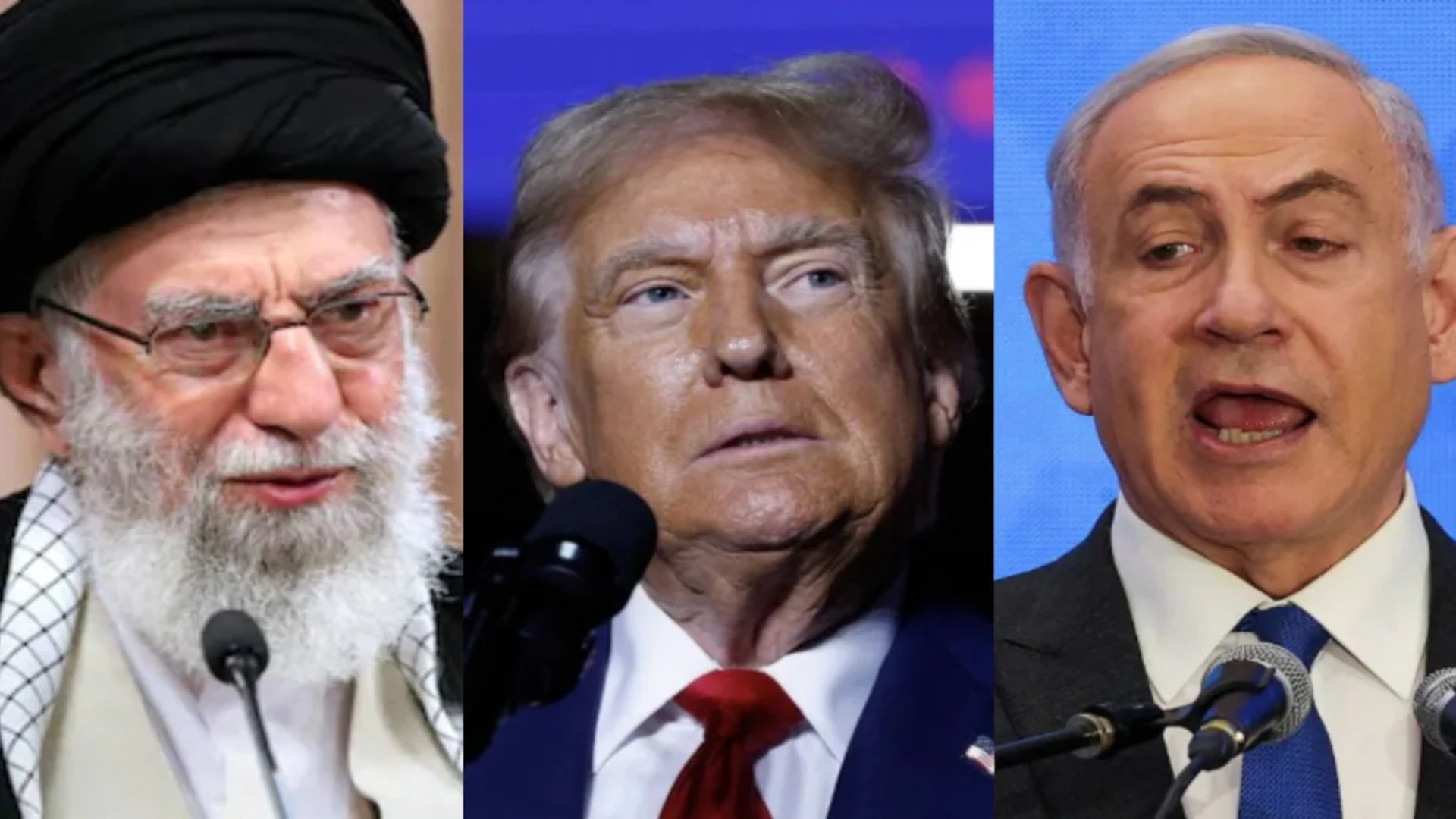
The Middle East entered another volatile phase on Saturday as military tensions, diplomatic maneuvering, and energy market uncertainty unfolded simultaneously across Iran, Israel, Lebanon, and the strategic Strait of Hormuz.
While United States President Donald Trump praised Israel as a key ally and projected confidence about a possible agreement with Iran, Tehran firmly rejected American claims over uranium transfers and warned that pressure tactics would not succeed.
The region remains suspended between war and diplomacy.
- Ceasefire efforts have slowed open confrontation in some areas
- New clashes continue in sensitive regions
- Threats to shipping lanes remain active
- Contradictory political statements deepen uncertainty
The overall situation remains highly unstable.
Trump Backs Israel and Calls It a Strong Ally
President Donald Trump strongly praised Israel in a fresh public message, describing it as a courageous and reliable partner of the United States.
He said Israel fights hard, remains loyal under pressure, and knows how to win during conflict.
The statement came as Washington continued to back Israeli security operations while also attempting to manage broader regional escalation involving Iran and Hezbollah.
Trump’s comments are likely to be welcomed in Israel but could deepen anger in Tehran and among Iran aligned groups across the region.
The timing of the message is significant because it arrived during an already delicate ceasefire environment, where any political rhetoric can quickly influence military decisions on the ground.
Iran Rejects Claims of Uranium Transfer to the United States
At the center of diplomatic friction is Iran’s nuclear program.
Tehran categorically denied repeated claims by Trump that it had agreed to transfer enriched uranium to the United States as part of a possible deal.
Iranian officials stated that no enriched material would be shipped anywhere and insisted that the issue was never part of formal negotiations.
Senior voices in Tehran described the American demand as unacceptable and unrealistic.
This sharp rejection highlights the deep mistrust between both sides.
- Washington has spoken publicly of progress
- Iran says the United States has not abandoned maximalist demands
- A final agreement remains uncertain
Strait of Hormuz Becomes Global Flashpoint Again
The most immediate global concern remains the Strait of Hormuz, one of the world’s most important energy shipping routes.
Iran first signaled a reopening of the waterway for commercial vessels, briefly calming oil markets and reducing fears of a prolonged energy shock.
However, that relief did not last long.
Iranian forces later reimposed restrictions and reports emerged that armed units fired near vessels attempting to transit the strait.
Tehran also warned that broader access would remain limited as long as the United States continued maritime pressure and restrictions linked to Iranian ports.
Iranian leaders argued that it is impossible for other nations to enjoy free passage while Iranian trade remains blocked.
This stance has turned the waterway into a bargaining tool in the larger confrontation with Washington.
Oil Prices Swing as Markets React
The changing status of Hormuz triggered immediate moves in global energy markets.
Brent crude, which had surged near triple digit levels earlier during the crisis, fell sharply after temporary reopening signals.
Traders interpreted that move as a sign that supply routes might stabilize.
Yet renewed restrictions and military incidents quickly revived uncertainty.
Analysts now warn that continued instability in the strait could again push fuel costs higher, affect shipping insurance, and increase inflation risks for economies already facing pressure.
For Asian economies that rely heavily on Gulf energy supplies, any sustained disruption in Hormuz remains a major strategic concern.
Lebanon Ceasefire Holds but Remains Fragile
Lebanon has entered what its leadership called a new phase after a recent ceasefire agreement with Israel.
President Joseph Aoun said talks linked to the truce are necessary steps for stability and should not be viewed as concessions on sovereignty.
Still, violence has not fully stopped.
Reports from southern Lebanon said Israeli forces carried out demolitions in border towns including Bint Jbeil, an area that has seen repeated conflict in past wars with Hezbollah.
Additional exchanges and security incidents have raised concerns that the ceasefire could unravel.
The death of soldiers and attacks involving peacekeepers have added further tension.
International observers now view the Lebanon front as one of the most fragile parts of the broader crisis.
Hezbollah Warns It Will Respond to Violations
Hezbollah leader Naim Qassem said any ceasefire must apply to both sides equally and warned that the group would respond to continued Israeli actions.
He demanded:
- A complete halt to hostilities
- Full Israeli withdrawal
- Prisoner releases
- Return of displaced civilians
- Reconstruction support
At the same time, he signaled openness to cooperation with the Lebanese state, suggesting Hezbollah wants to balance military deterrence with domestic political legitimacy.
This dual approach reflects a familiar regional pattern where armed pressure and political negotiation proceed at the same time.
International Powers Expand Their Role
Several countries are now increasing involvement to prevent the crisis from spiraling further.
France and the United Kingdom have discussed a multinational mission aimed at securing maritime navigation in the Strait of Hormuz.
United States and Saudi officials have also reportedly coordinated on shipping security and ceasefire stability in Lebanon.
Meanwhile, reports indicate Pakistan could host a future round of talks between Washington and Tehran.
If confirmed, that would place Islamabad in an increasingly visible mediation role at a time when many governments are searching for channels to reduce tensions.
Iran Claims Battlefield Victory, US Says Pressure Continues
Iranian parliamentary speaker Mohammad Bagher Ghalibaf said Tehran accepted only a temporary truce because its demands had been met.
He claimed Iran was victorious in the field and maintained control over the Strait of Hormuz.
The United States has taken the opposite view, insisting economic and naval pressure remains effective and will continue until a broader agreement is finalized.
These competing narratives matter because they shape domestic opinion in both countries.
Each side wants to project strength while still keeping diplomatic options open.
Humanitarian and Regional Costs Continue
Beyond strategy and politics, civilians across the region continue to bear the consequences.
- Reports from Gaza described deaths linked to ongoing military fire
- Humanitarian agencies warned critical water distribution had been disrupted
- In Lebanon, damaged homes and displaced families remain a concern
- Attacks on peacekeepers underline continued instability
- In Iran, officials reported thousands killed during the recent conflict
Even where active combat has slowed, the human toll remains severe.
What Happens Next
The coming days may determine whether the region moves toward negotiation or another dangerous escalation.
Key factors to watch include:
- Whether Iran and the United States resume direct or mediated talks
- If the Strait of Hormuz remains partially open or faces new closures
- Whether the Lebanon ceasefire survives repeated violations
- How oil markets react to every military signal
- Whether global powers can coordinate credible de escalation measures
A Pause, Not Peace
Despite moments of optimism, the Middle East is not at peace.
The ceasefires now in place look more like tactical pauses than lasting settlements.
Iran and the United States remain divided on nuclear issues, Israel and Hezbollah continue mutual accusations, and Hormuz remains a pressure point with worldwide economic consequences.
Trump’s praise for Israel and Tehran’s rejection of uranium claims capture the central reality of this crisis: diplomacy is active, but trust is absent.
Until that changes, every statement, strike, or shipping incident can move the region back toward conflict.